List of Materials Needed:
- Notebook, journal, or binder with blank/ruled pages, or empty calendar
- Colored pencils, crayons, or markers (at least 5–7 colors)
- Pen or pencil for writing
- Ruler (optional, for boxes or color stripes)
- Stickers or stamps (optional, for decoration)
- small printed mood chart or color key template (optional)
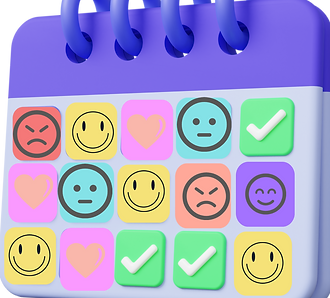
Instructions:
1. Make a Color Key: Pick 5–7 colors and label them with moods (e.g., 💛 happy, 💙 calm, ❤️ mad, 💚 proud, 💜 worried, 🧡 excited).
2. Ask students to make a calendar by labeling the dates, or give them an empty calendar
3. Write today’s date, and ask students to pick a color that represents their mood. Ask them, "Choose the one color that best matches your main mood."
4. On the bottom, ask the students to do three quick lines of journaling. Some questions you can ask are:
"What happened? (one event)"
"How I felt + why (use feeling words)"
"Body check (where did I feel it—tummy, head, shoulders?)."
"Write one thing that helped (deep breaths, break, talking) or one tiny win."
"Add one sentence about something you’re thankful for or a bright spot."
"Draw a tiny symbol that fits your day."
“Tomorrow I will ...” (ask for help, take 3 breaths, be kind to me)."
5. Focus on self-reflection, growth, and understanding emotions.
6. Since it is an everyday activity, you can keep some days short and just ask the students to write a sentence of reflection and color their emotions.
Read more about:
The link between emotions and colors here.
The proven effects of coloring therapy here.
Research on the benefit and effect size of journaling for mental health here.